Packaging infrastructure

Your videos are better than their packaging.

ChannelLabs reads your actual video — the transcript, the retention curve, your real search terms — and writes the title, description, chapters, tags and thumbnail concepts that make it findable and clickable. It doesn't tell you what to film. It makes what you filmed get found.

Built for established channels. We run our own 767-video channel through it every day.

Real output, scored by the vision reviewer — not a mockup. Click it.

Every recommendation traces to real channel data
· transcripts· retention curves· search terms· subscriber conversion
The problem

Good videos die of bad packaging.

You made a genuinely good video. It's dying anyway — not because the content is bad. The first thirty seconds lose people. The title targets a phrase nobody searches. The thumbnail doesn't survive being 120 pixels wide in a phone feed.

The work is done. The door is shut.

01
The cold open loses them

The retention curve falls off a cliff before the good part ever starts.

02
The title targets nothing

Clever, memorable, and matched to a phrase no one is actually searching.

03
The thumbnail vanishes

Legible on your monitor, unreadable at feed size on a phone.

How it works

Three steps. No guesswork.

STEP 01
Connect the channel

Link your channel once. ChannelLabs reads the backlog and learns your voice from your own videos.

STEP 02
Drop in the transcript

Paste the captions. Get a title, description, chapters, tags and thumbnail concepts — grounded in what the video actually says.

STEP 03
Apply to YouTube

Review, adjust, and push the packaging straight to YouTube. No copy-paste shuffle.

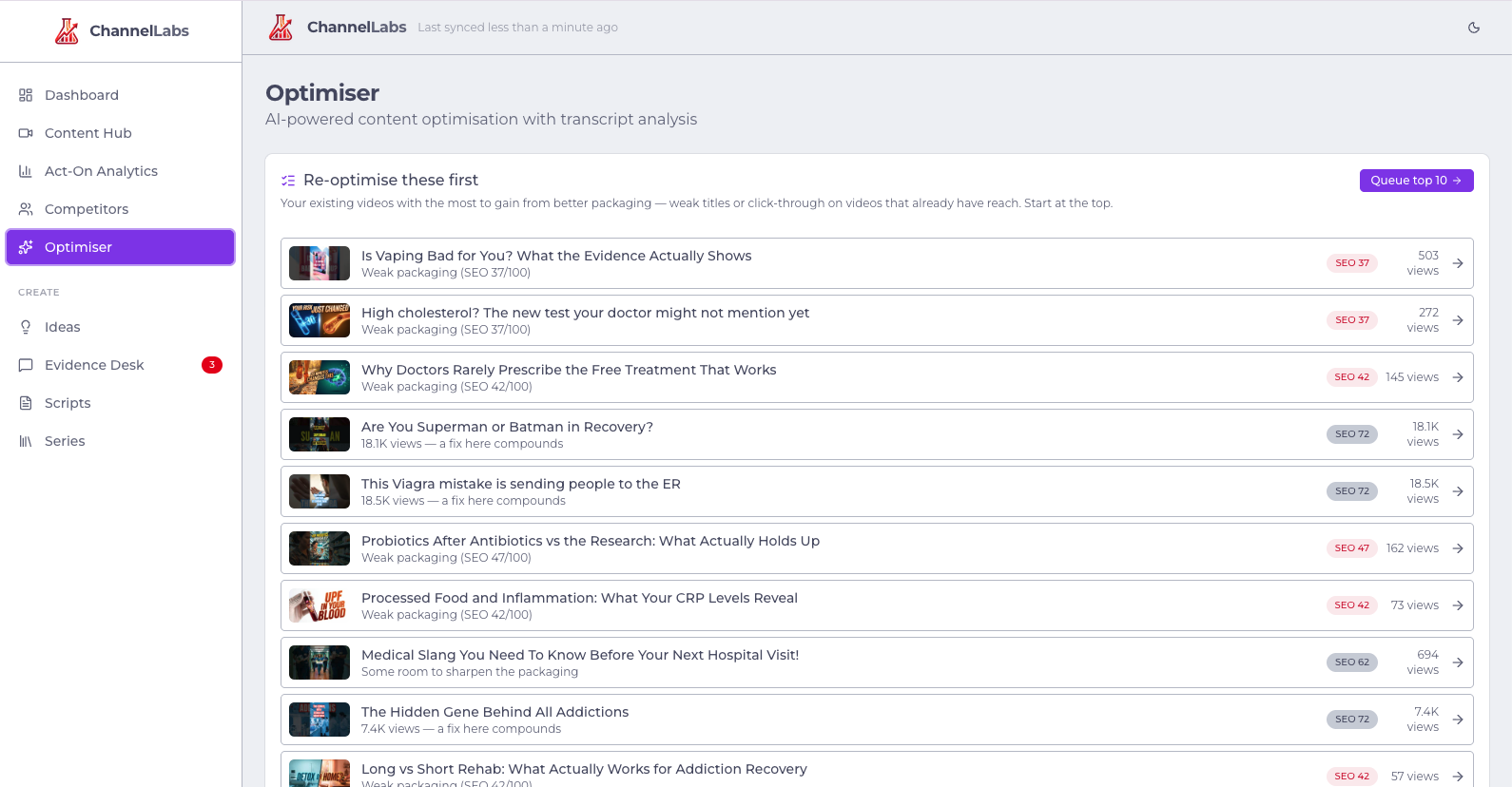
The backlog

Your best video is already uploaded. It just needs a better door.

ChannelLabs ranks your existing library by opportunity — weak packaging on videos that already pull views — so you fix what compounds first. No new filming required.

Real worklist from our own channel, 767 videos in.

Capabilities

Evidence-based packaging. Every recommendation traces back to real data.

01
reads the transcript
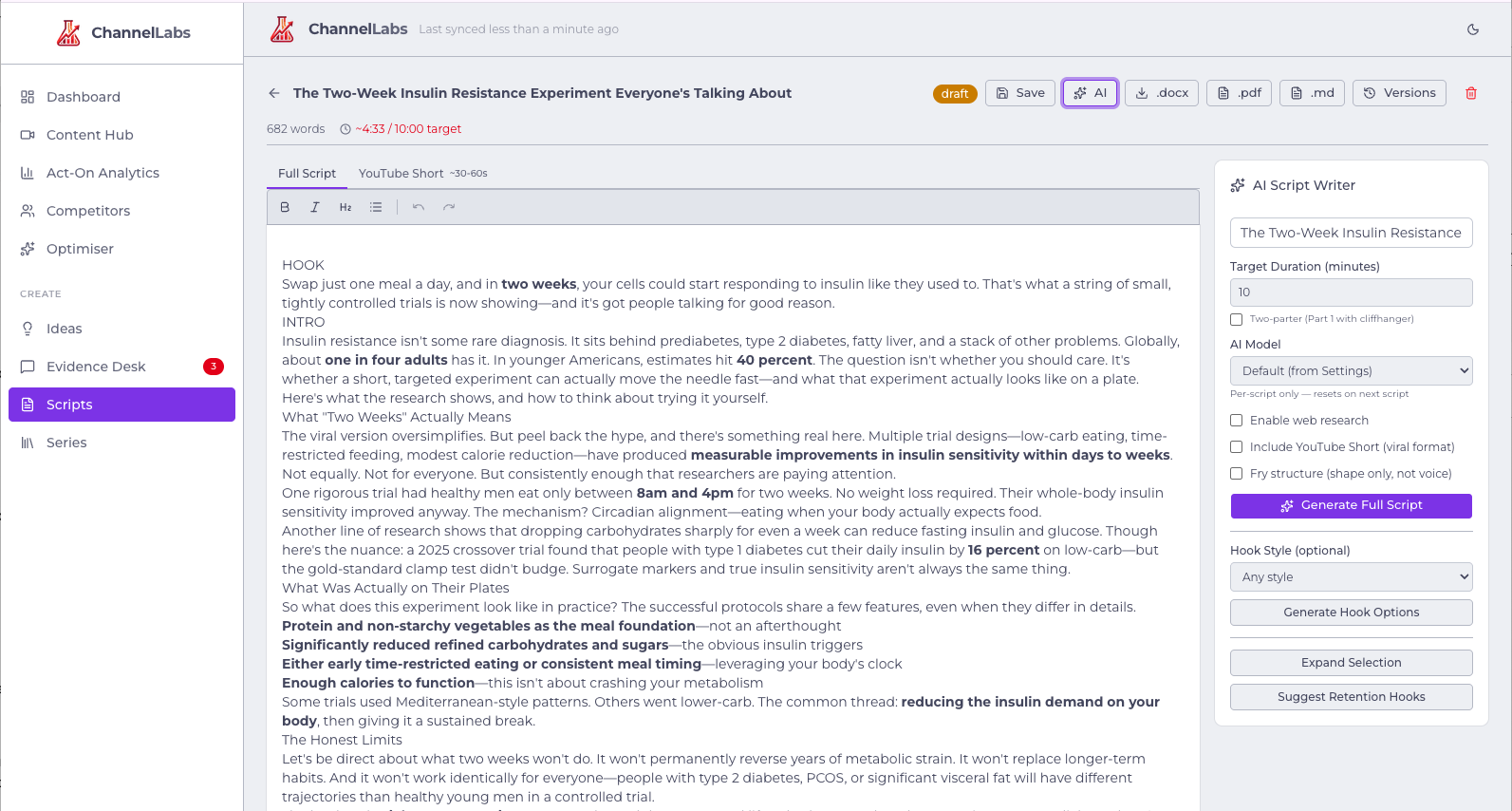
Captions in, packaging out

Paste the captions — or pull them straight off YouTube. Get a title, description, chapters, tags and thumbnail concepts grounded in what the video actually says, then apply title and description to YouTube in one click. Chapters are snapped to real caption timestamps in code, so a made-up timestamp can never reach YouTube.

02
reads view history
The backlog, ranked by money left on the table

Weak packaging on videos that already pull views is the cheapest win on your channel. ChannelLabs ranks your library by exactly that — its own reasoning reads “a fix here compounds” — so you always know which video to fix first.

03
reads the retention curve
Find the cliff. Get a timestamp.

It reads your audience-retention curve, finds where a slow intro is bleeding viewers, and returns the exact second to cut to — with a confidence level. And when the pattern isn't there, it says nothing rather than inventing advice.

04
reads subscriber conversion
Find your quiet subscriber magnets

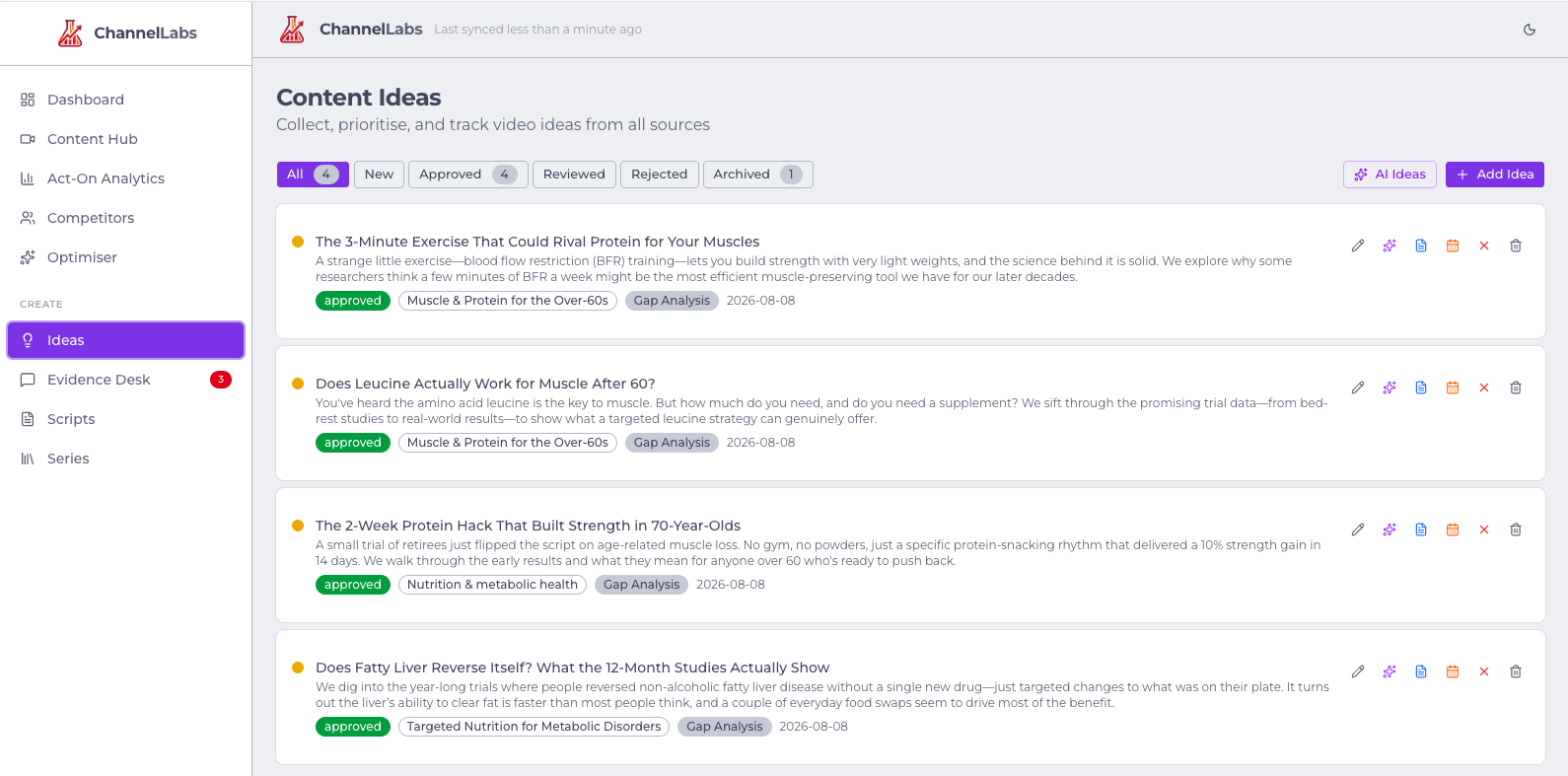
Some videos quietly convert viewers into subscribers at several times your channel average. ChannelLabs surfaces them, then feeds those formats into its idea engine so your next video starts from what already works.

05
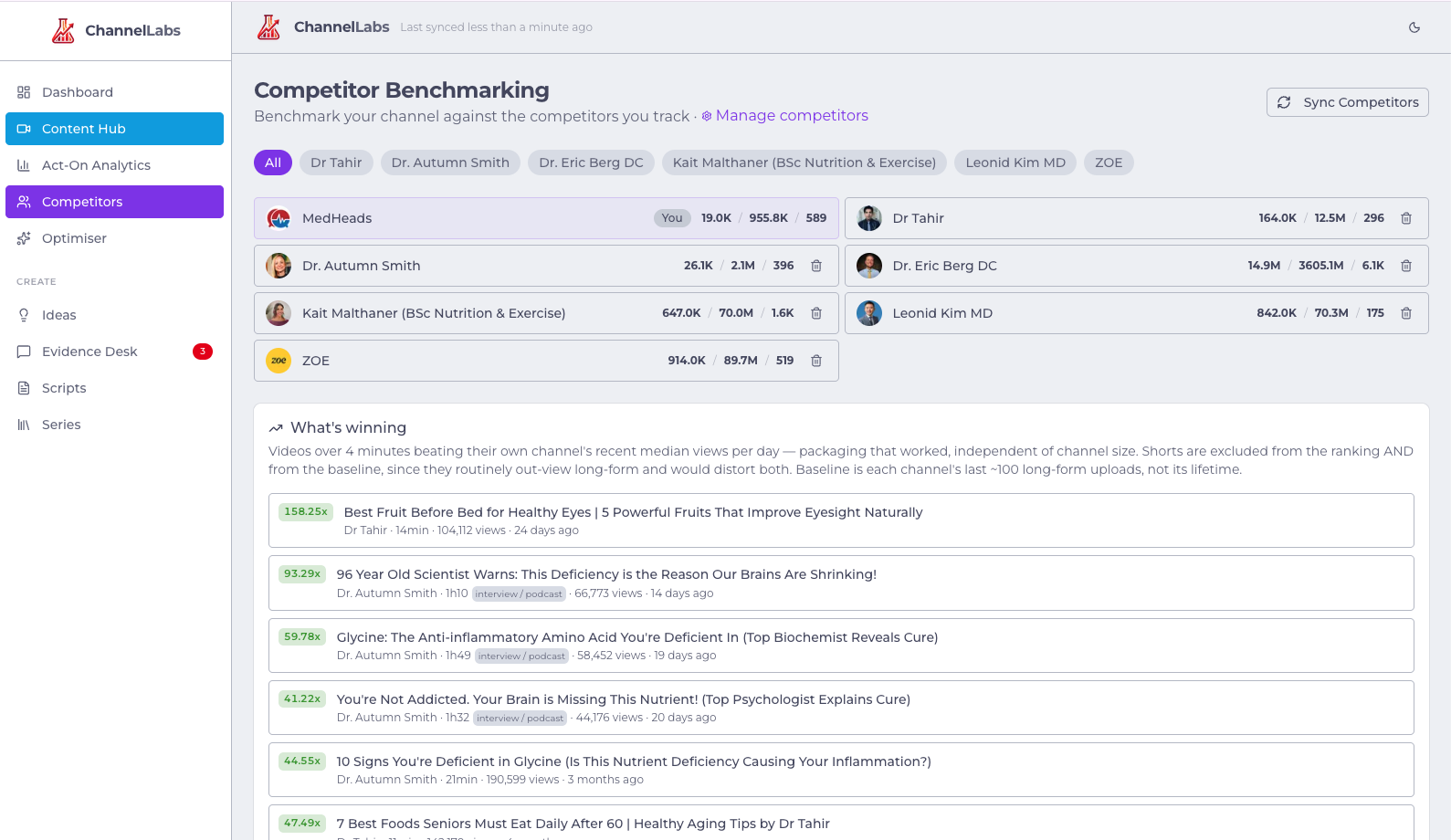
reads competitor uploads
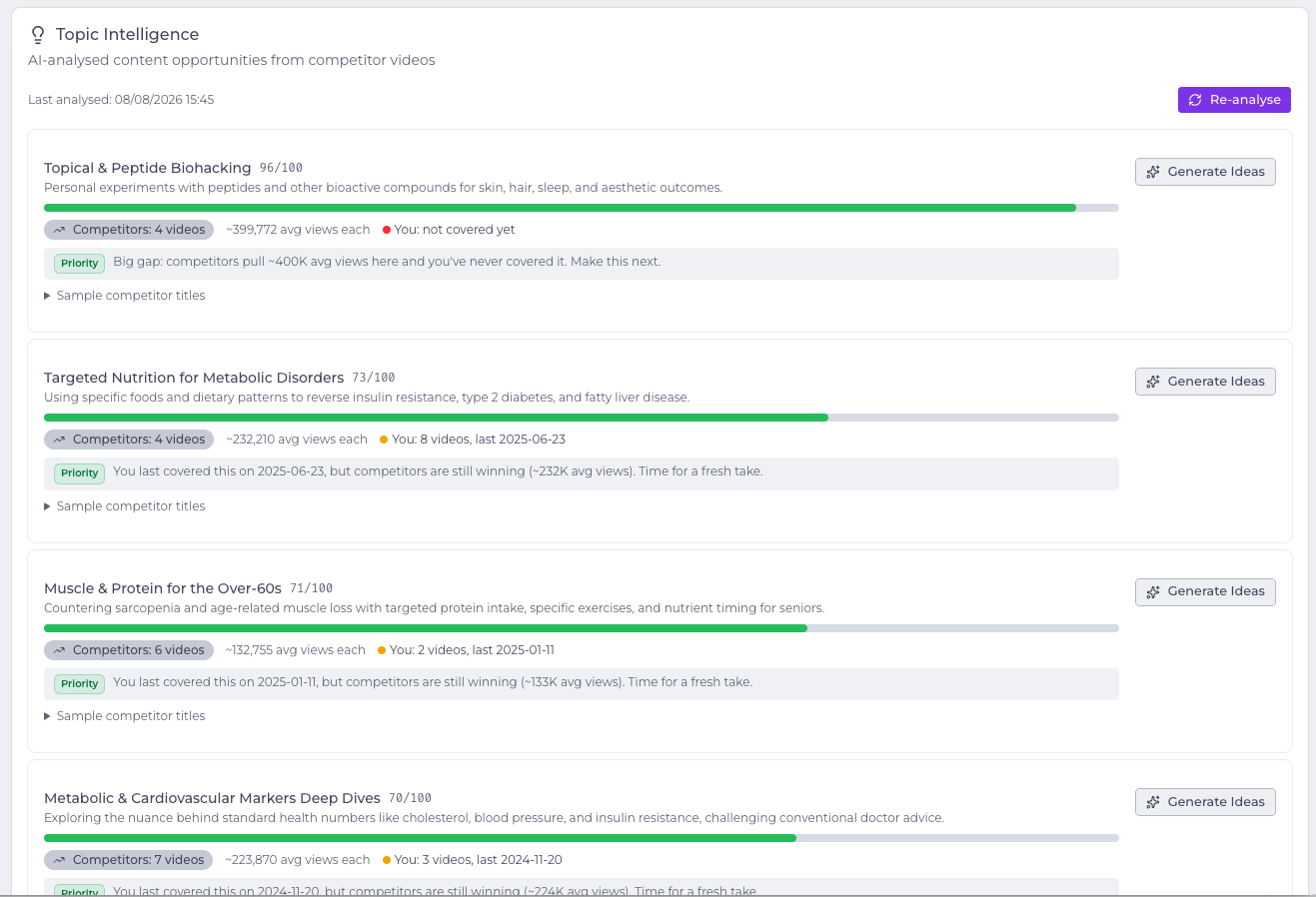
Topic intelligence, with a verdict

Clusters what your competitors are publishing into scored opportunities and gives each one a plain-English verdict: make this next, worth testing, or skip for now — weighed against what you've already covered.

06
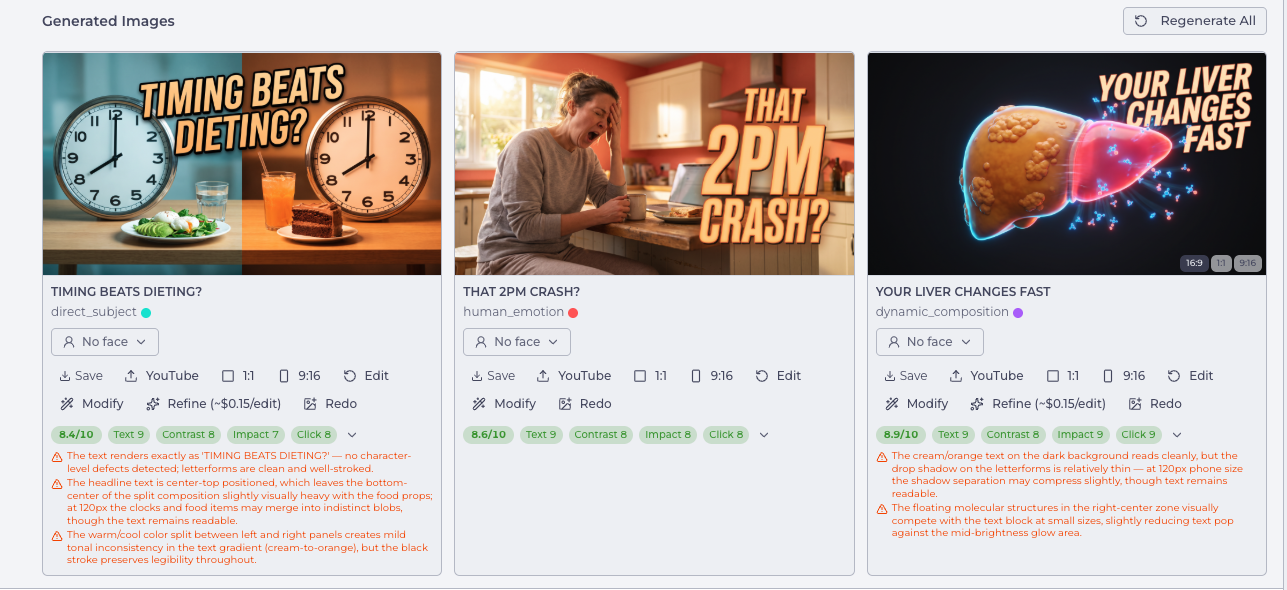
reads at feed size
Thumbnails scored where they actually live

Every generated thumbnail is graded on seven dimensions by a vision model — including the “120px squint test”: can you still read it at phone-feed size? Text is checked character by character against the headline you asked for.

The real thing

Unretouched. Our own channel, every day.

These are screenshots of the live product on our own tenant — the 767-video channel ChannelLabs runs on first. No staging data, no mockups.

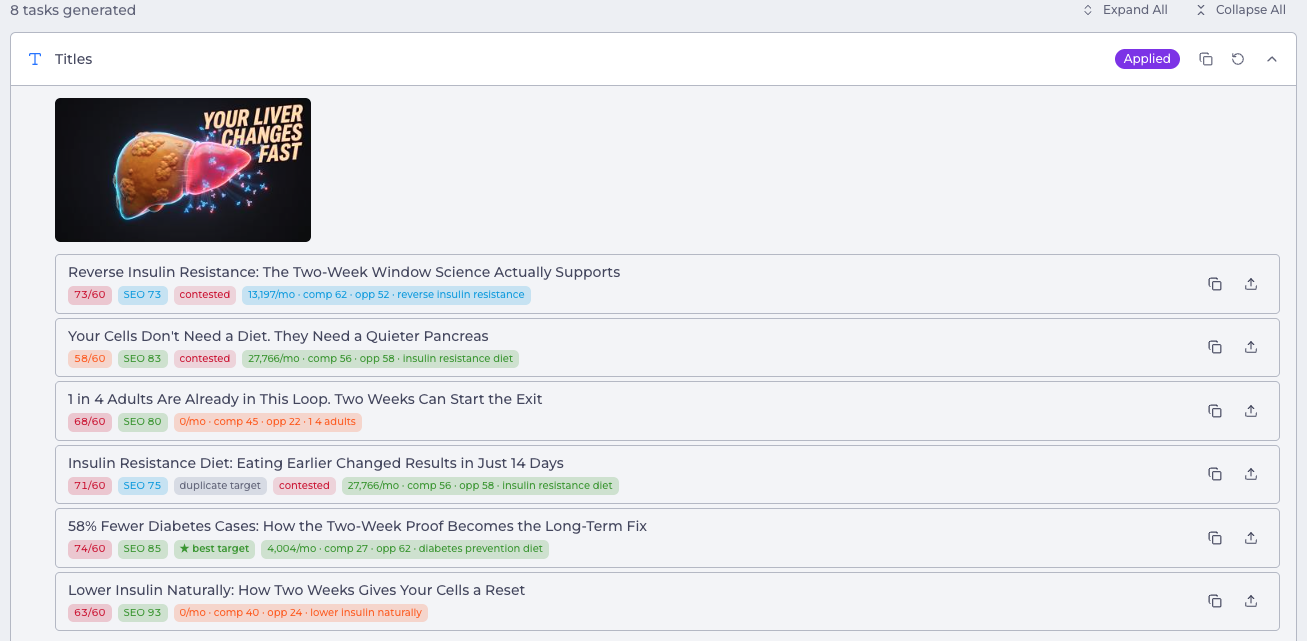
Captions in, packaging out

One transcript becomes the whole pack.

Drop in the captions and get the title, the full description, and chapters — every timestamp snapped to a real caption time in code, never guessed by the model. Title and description apply straight to YouTube. This is a real, applied pack for one of our videos.

The thumbnail lab

Three concepts. Seven scores each. Specific complaints.

Every thumbnail is graded by a vision model that quotes exactly what it can see — a duplicated word, text drifting into YouTube's duration stamp, a face cropped too tight. One click feeds those findings back as edit instructions. The social posts underneath came from the same transcript.

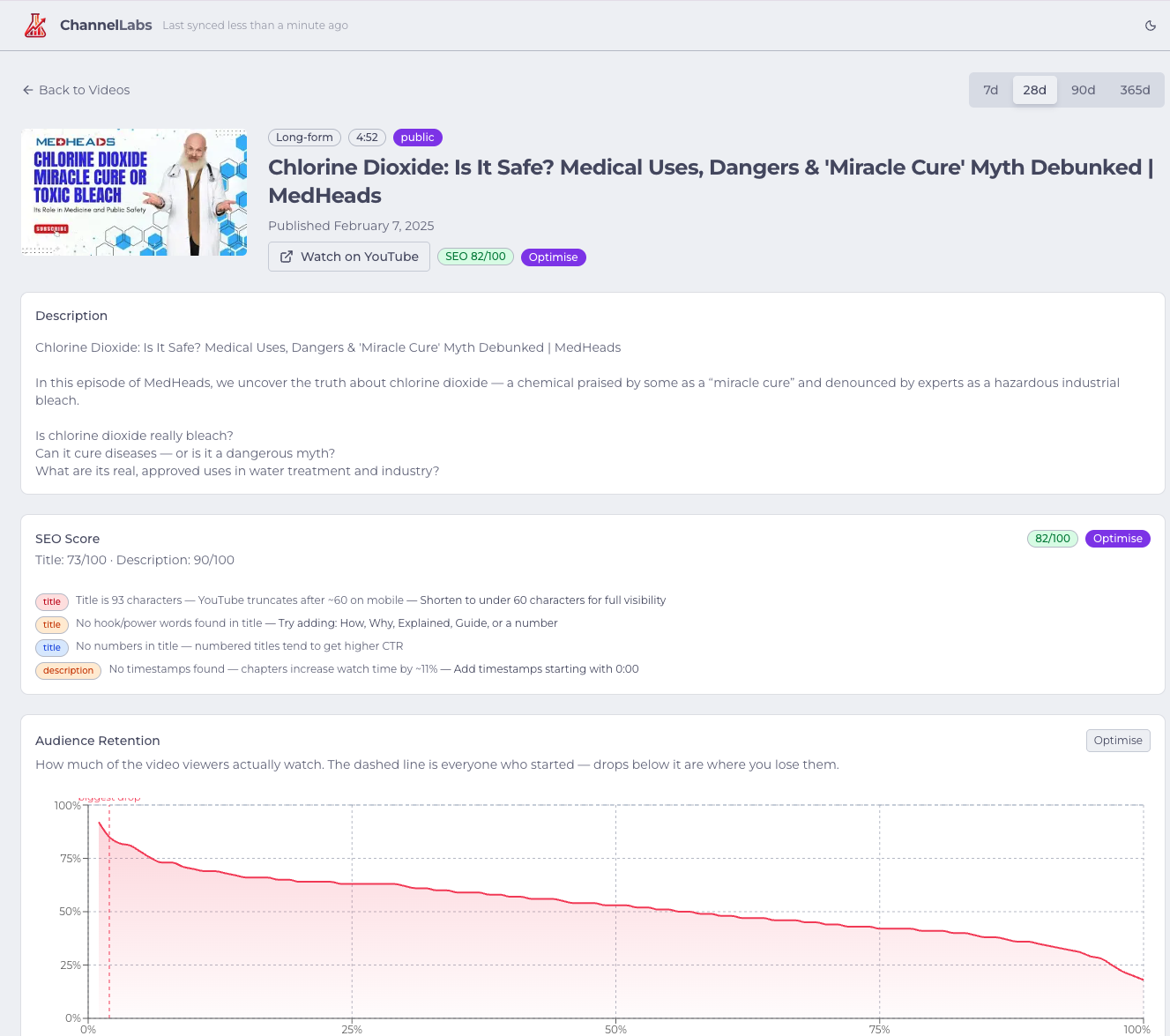
Retention, read properly

The cliff, the timestamp, and the searches that brought them.

“Steepest drop-off around 4% of the video — tighten or re-cut there.” That's the app talking, about a real video. Below it: the actual YouTube searches viewers arrived through — actual demand, not a predicted estimate.

The dashboard

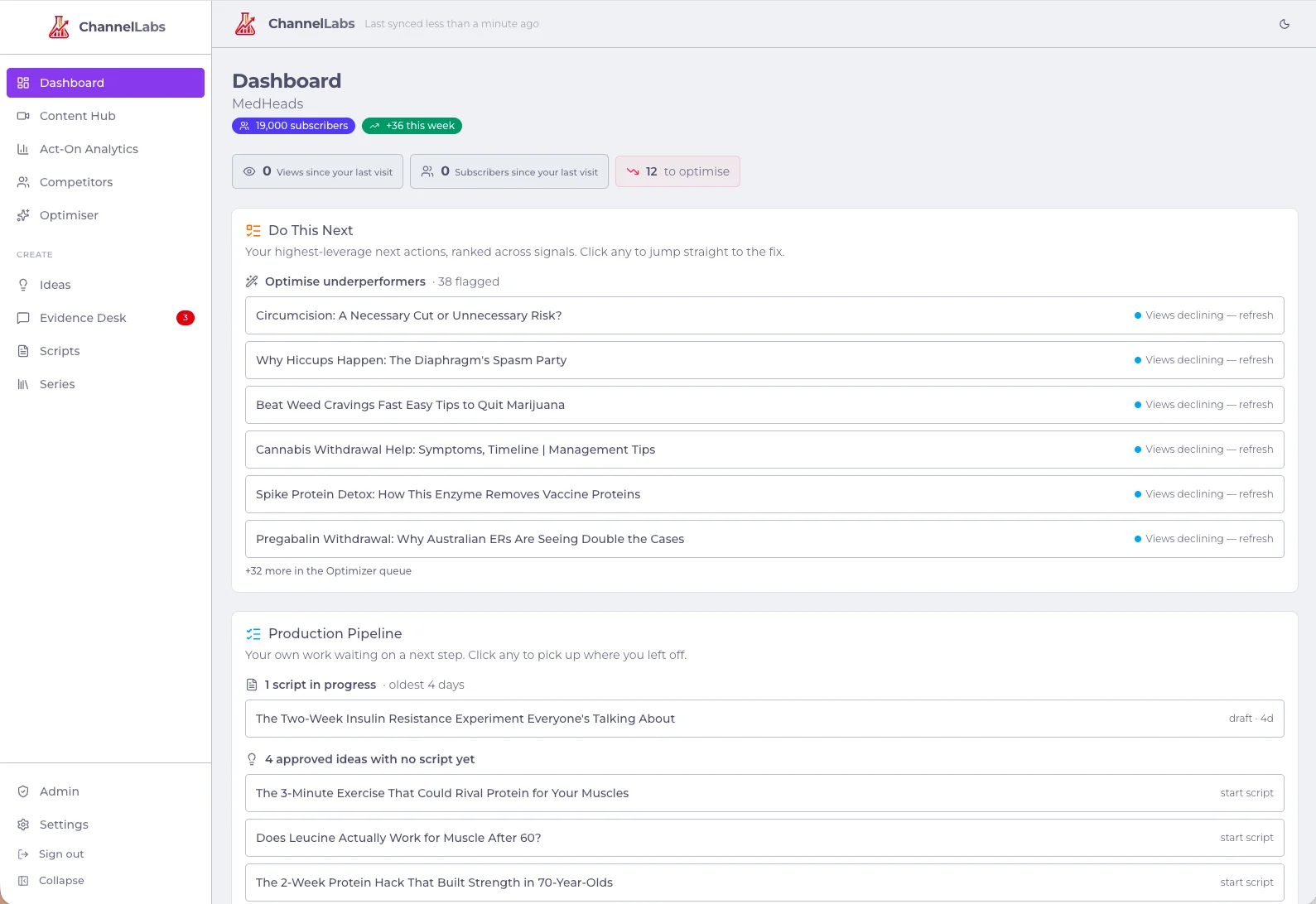
Open the app, get told what matters.

“Do This Next” ranks the highest-leverage actions across every signal — declining views, retention slips, packaging gaps — and each row jumps straight to the fix.

Act-on analytics

Signals you can act on, not charts to admire.

Every video is classified from its 28-day view pattern — evergreen, spike, declining, dormant — and each classification arrives with the action it implies. Declining? “Consider a description refresh,” with the Optimise button right there.

Topic intelligence

What competitors are doing, reduced to a verdict.

Competitor uploads are clustered into topics, scored against what you've already covered, and given a plain-English call: worth a look, or covered — no urgent action. One click turns a cluster into ideas in your own voice.

How this compares

The big tools answer a different question.

vidIQ and TubeBuddy are the established names — millions of creators, browser extensions, keyword research, trend feeds. They're good at what they do, and what they do is help you guess well: type a topic, get suggestions shaped by what's trending.

ChannelLabs starts from the other end. You already made the videos. The evidence of what works — what was said, where viewers left, what they searched to find you — already exists. We read it.

Keyword tools vidIQ · TubeBuddyChannelLabs
What the AI readsA topic or keyword you type in, plus market trends and your title history.The video itself: its transcript, its retention curve, and the real searches that brought viewers.
Built forEveryone — from first upload to millions of subscribers, free tier upward.Established channels with a backlog. Invite-only, a handful at a time.
The outputSuggestions you copy into YouTube Studio's fields yourself.A complete pack — title, description, chapters, tags — applied to YouTube in one click.
ThumbnailsEditors and analyzers — you design, they score.Generated, then graded on seven dimensions by a vision model that quotes what it sees.
Your old videosBulk-editing tools if you know what to change.The whole backlog ranked by what a better title or thumbnail is actually worth — fix what compounds first.
When there's no evidenceThe AI answers anyway.It says nothing. No retention data, no retention advice.

Starting from zero? The keyword tools are the right call — genuinely. But if your channel already has a body of work earning views every day, guessing is the expensive option.

Honest to a fault

An instrument, not a hype machine.

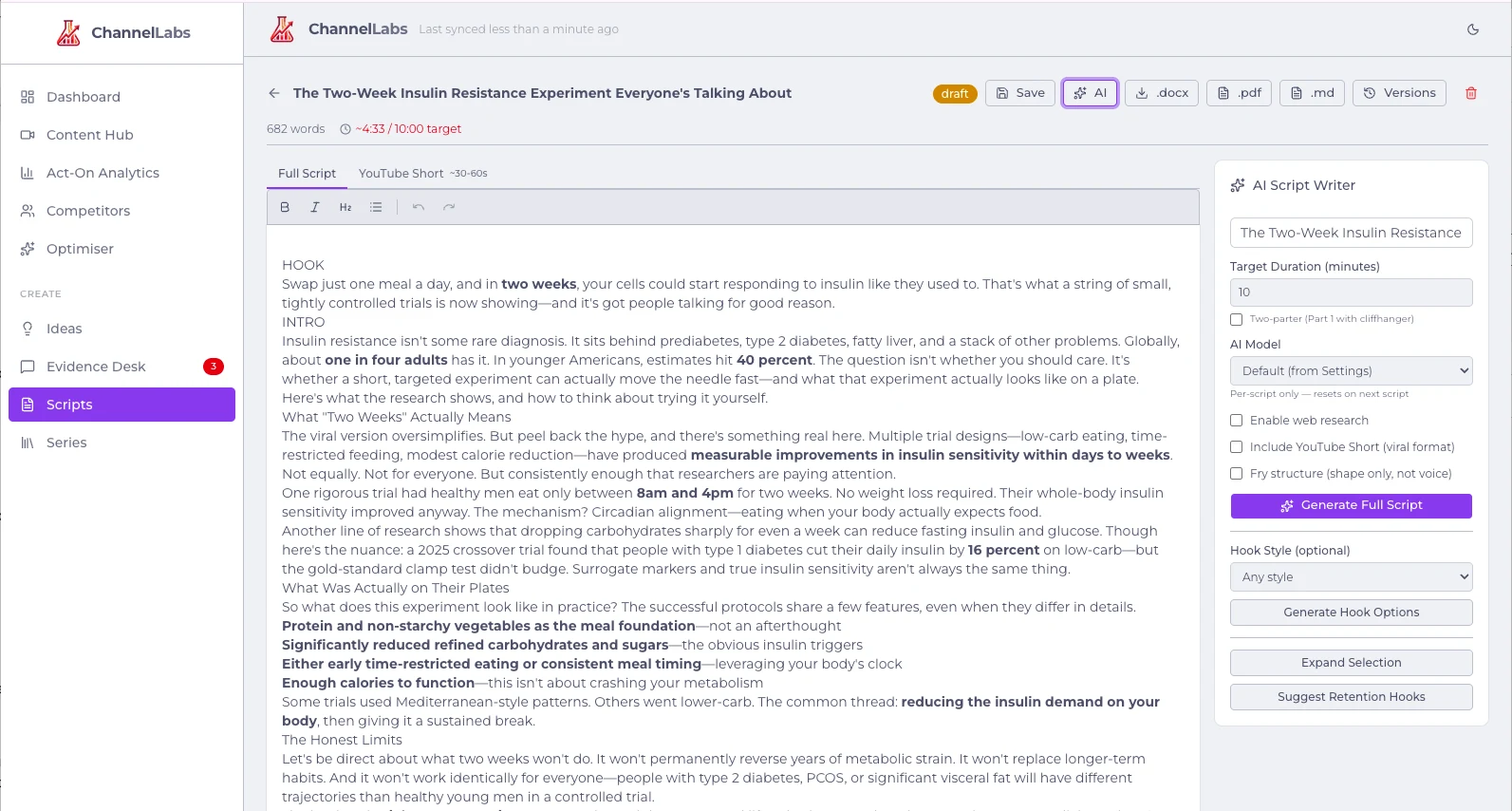
These aren't values statements. They're constraints in the prompts that run in production — quoted here word for word.

Citations are real or absent

Script research only cites sources its searches actually surfaced. From the prompt that runs in production:

“A missing link is fine; a fabricated one is not.”
No clickbait, by construction

The generators are forbidden the tells of AI-written hype. Verbatim, from the code:

“Never use scare tactics, unqualified superlatives, or clickbait.”
Honest scores

The scorer reports what it can see, not what would flatter you. Its own instruction:

“Be honest with scores — not every hook will be a 5.”

The work is done.
Open the door.

ChannelLabs is rolling out to a small number of established channels. Request access and we'll read your backlog.

No credit card. No countdown timer. No pressure.